

PEPITA® sales methodology: the six stages explained
PEPITA® is Inner Leader's six-stage consultative selling methodology: Prepare, Explore, Pain, Impact, Translate, Advance. What each stage involves.
- Topic
- Sales
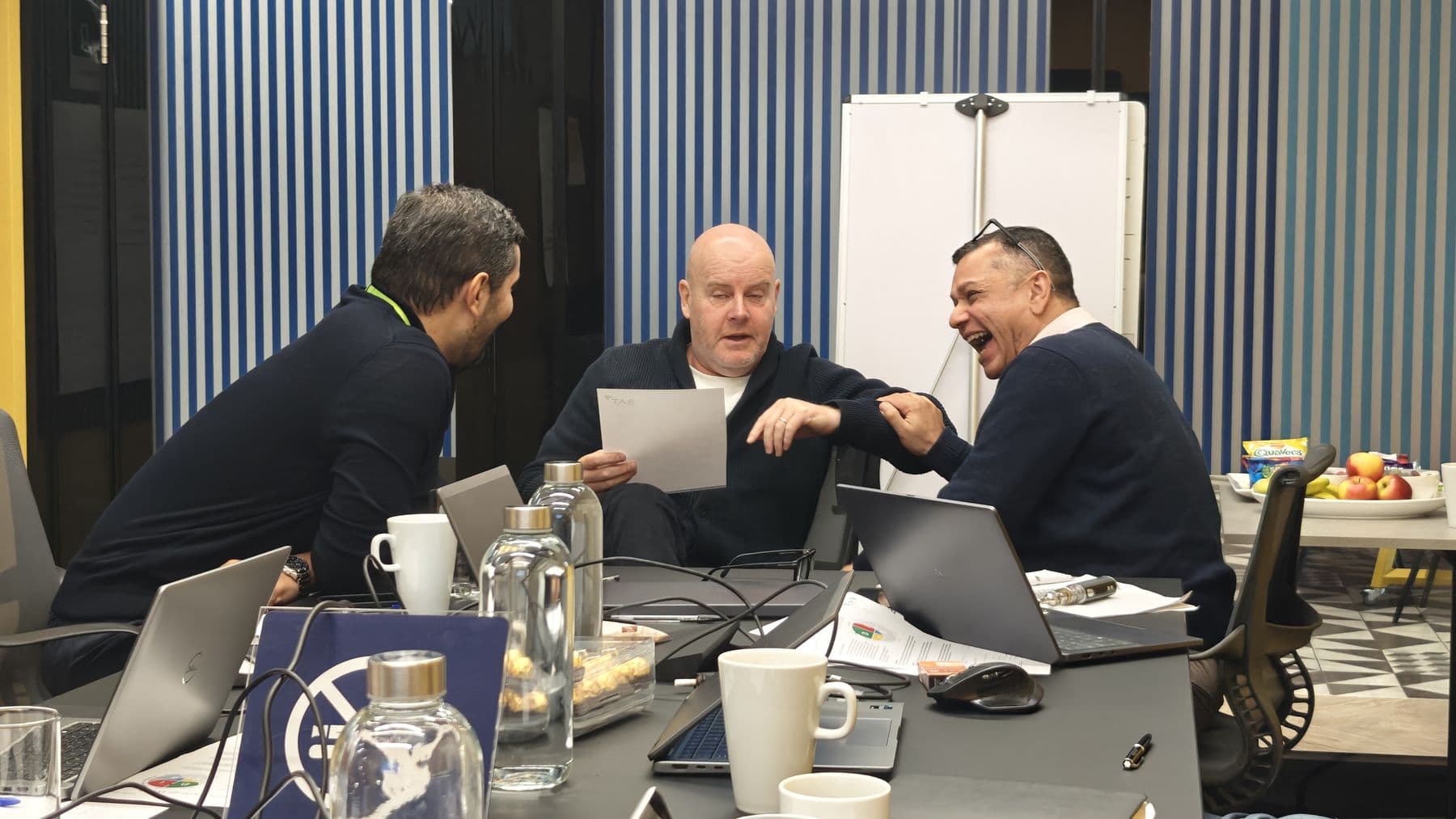
PEPITA® is a six-stage consultative selling methodology created by Tim Cooper-Robins, the founder of Inner Leader, a UK leadership, team and sales training consultancy. The six stages are Prepare, Explore, Pain, Impact, Translate and Advance. Each stage tells a salesperson what to do and what to find out at that point in a conversation with a customer.
Many B2B sales teams have a process for the pipeline and a checklist for qualifying deals. Fewer have one shared way of running the conversation with the customer, and that conversation is where a deal is won or lost. PEPITA® gives your salespeople that shared way, in plain language.
This page explains what PEPITA® stands for, what a salesperson does at each stage, who it is for and how we teach it. We built PEPITA® from two decades of sales psychology work, and it sits at the centre of our consultative sales training. PEPITA® is a registered trade mark of Inner Leader Ltd.
What PEPITA® stands for
PEPITA® stands for Prepare, Explore, Pain, Impact, Translate, Advance. The six letters are the six stages of a consultative sales conversation, in the order they usually happen. A salesperson can use them in a single meeting and across a deal that runs for months. Our article on what consultative selling is explains the approach behind the model.
The six stages of PEPITA®
- Stage 1PrepareArrive with a point of view you can test.
- Stage 2ExploreUnderstand their world before you try to solve anything.
- Stage 3PainFind the problem that is worth solving.
- Stage 4ImpactHelp the customer weigh the cost of doing nothing.
- Stage 5TranslateConnect what you offer to what they need.
- Stage 6AdvanceAgree a clear next step in every conversation.
PEPITA® is a conversation methodology, which means it guides what the salesperson does and says with the customer. Qualification frameworks such as BANT and MEDDPICC do a different job, which is to record what you know about a deal.
What a salesperson does at each PEPITA® stage
1. Prepare
Prepare is the only stage that happens before the salesperson is in the room. They research the customer and arrive with a working hypothesis, which is their best guess at what might matter to the customer. They work out what would prove that guess wrong. They also decide the one next step they want the customer to agree to by the end of the meeting.
2. Explore
In Explore the salesperson opens with their point of view, hands the customer the floor and lets the customer correct them. They ask about the customer's world before the customer's problem: their plans, what is changing and who else is affected. Our guide in PEPITA® is for the customer to do around 70% of the talking.
3. Pain
The first problem a customer mentions is rarely the real one. In the Pain stage the salesperson works through three layers. Operational pain is what is broken in the day to day. Strategic pain is what is at risk in the direction of the business. Personal pain is what is at stake for the person in front of them.
4. Impact
A customer can agree there is a problem and still do nothing about it. In Impact the salesperson asks questions that help the customer work out what the problem is costing them, and then what becomes possible once it is solved. The customer puts the numbers on it. When they later look at the price, they weigh it against a cost they have named themselves.
5. Translate
Translate is where the salesperson presents. They first play back what they have heard about the customer's situation, the problem and what is at stake. They then show how the relevant part of what they sell meets what the customer needs, using the customer's own words. They leave out everything that does not solve a problem the customer described.
6. Advance
Every conversation ends with a clear next step. We call that next step an advance. A good advance is specific, has an owner, has a date and is understood by both sides. The salesperson asks for a step that matches the value they have built in the conversation. They then confirm it in a follow-up email to see whether it holds.
Our longer article on where PEPITA® fits among sales methodologies has worked examples and questions to ask for the six stages.
How the six PEPITA® stages fit together
The stages usually run in order, and the model is a loop: a good advance feeds the preparation for the next conversation. Prospecting comes before PEPITA® starts, because it is how a salesperson earns the first conversation.
Sales managers use the same six stages in deal reviews. When a deal stalls, working back through the stages usually shows which one was skipped. Objections often point the same way. A customer who says the price is too high may be telling you that the Impact stage was never finished.
Our article on the four psychological phases of a sale covers what is happening on the buyer's side.
Who PEPITA® is for
PEPITA® is for people who sell to other businesses through conversations, where the customer's first request is often a symptom of a larger problem.
- B2B sales teams who want one shared way of running a deal.
- Account managers growing existing accounts.
- Sales leaders who want a common language for deal reviews and coaching.
- Technical experts and consultants who sell as part of their role.
PEPITA® suits both new and experienced salespeople. It is the wrong choice for teams looking for closing tricks or pressure tactics, and for teams that only take orders or run high-volume telephone sales.
How we teach PEPITA®
Inner Leader teaches PEPITA® through in-house sales training, to sales teams of 6 to 25. A programme is typically 2 to 4 workshop days across 4 to 8 weeks, plus follow-up on live deals. We deliver in person anywhere in the UK, with virtual sessions for follow-through and deal coaching.
Your team practises each stage in role-plays built on your own products, buyers and deal sizes, with structured feedback afterwards against a model conversation. Between workshops they use PEPITA® on live deals and bring back what happened. Inside each stage they learn a toolkit of questioning, listening and influencing skills.
We put the workshop days weeks apart on purpose, with live deals in between. A review of 317 experiments by Cepeda and colleagues (2006) is the research behind spreading learning out over time. In each role-play your salespeople have a go, hear feedback and try again. That follows what Anders Ericsson and his colleagues (1993) called deliberate practice, which they described as effortful activity designed to improve performance.
How PEPITA® compares with other sales models
You do not need to throw away the framework you already use. Teams keep BANT or MEDDPICC in their CRM system as the record of what they know about a deal. They use PEPITA® to guide the conversations that fill it in. If your team already uses SPIN Selling, there is nothing to unlearn.
Sandler and Challenger are powerful, well-known sales training models. They can feel complex, and they are rooted heavily in American sales culture. PEPITA® was built for the way consultative selling works here in the UK: six stages and plain language.
Results clients have measured from our sales training
Two clients have put a number on what sales training with Inner Leader was worth to them. The two programmes were different, and each case study describes the programme the client ran and how the result was measured.
BTL Aesthetics ran a structured leadership and sales development programme with us over twelve months and measured a 5.5 times return on what the programme cost.
Fifty-five SAP Concur sales executives across Europe went through a three-module sales negotiation programme. In the twelve months that followed, sales revenue rose by £480,000, a 9.6 times return on the investment.
We teach PEPITA® as part of our consultative sales training, and your team practises it on your own products, buyers and live deals.
See the programmeQuestions
What is the PEPITA® sales methodology?
PEPITA® is a six-stage consultative selling methodology created by Tim Cooper-Robins of Inner Leader, a UK leadership, team and sales training consultancy. The stages are Prepare, Explore, Pain, Impact, Translate and Advance. It guides what a salesperson does and says in a conversation with a customer, from the research before the first meeting to the agreed next step at the end.
Who created PEPITA®?
PEPITA® was created by Tim Cooper-Robins, the founder of Inner Leader, and built from two decades of sales psychology work. PEPITA® is a registered trade mark of Inner Leader Ltd. Inner Leader teaches it to B2B sales teams as part of its consultative sales training, in person anywhere in the UK and virtually.
What does PEPITA® stand for?
PEPITA® stands for Prepare, Explore, Pain, Impact, Translate, Advance. The salesperson prepares a point of view, explores the customer's world and finds the problem worth solving. They then help the customer weigh what it costs, connect what they sell to what the customer needs and agree a clear next step.
Is PEPITA® a qualification framework like BANT or MEDDPICC?
No, PEPITA® is a conversation methodology, which guides what the salesperson does and says with the customer. BANT and MEDDPICC are mainly used to judge whether an opportunity is real. Most teams use both: the framework records what they know about a deal and PEPITA® guides the conversations that find it out.
How long does it take a sales team to learn PEPITA®?
A sales team will be using PEPITA® on live deals by day two of the training. Inner Leader's programmes are typically 2 to 4 workshop days across 4 to 8 weeks, plus follow-up on live deals. The weeks between workshops let salespeople use each stage with real customers and bring back what happened.
Bring this into the room.
Tell us what's going on with your team. If we're not the right fit, we'll let you know. We reply within one business day.