

In-house sales training: how it works and how to choose a provider
What in-house sales training is, how it differs from an open course, how a programme runs, what to ask a provider and how to measure the return.
- Topic
- Sales
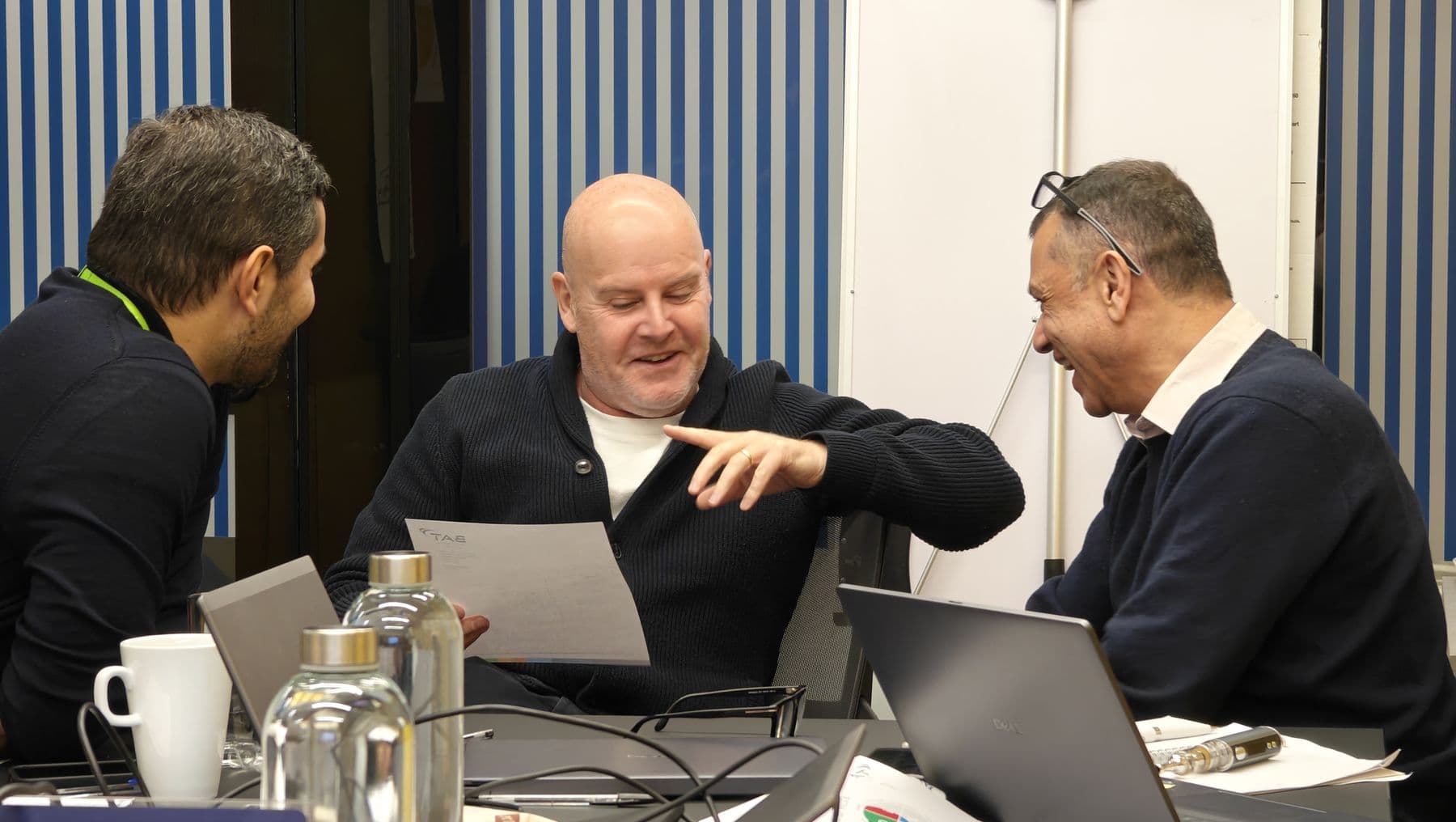
In-house sales training is sales training run privately for one company's sales team and built around that company's products, buyers and deals. The other option is an open course, where individuals from different companies attend a scheduled public class. An in-house programme is usually delivered in person, online or as a mix of the two.
If you lead a sales team, you may be weighing up whether to send people on courses one at a time or to bring a provider in to work with the whole team. The two do different jobs, and the right choice depends on what you want to change.
This guide covers how in-house sales training differs from an open course, how a programme runs and what to ask a provider. It also covers how to measure the return and where it goes wrong. All of Inner Leader's sales training is in-house, and the figures further down come from two clients who measured the result.
In-house sales training compared with an open course
An open course teaches one person a general set of sales skills. In-house sales training works on how a whole team sells, using that team's real customers and deals. The table shows the main differences.
| Open course | In-house sales training | |
|---|---|---|
| Who attends | Individuals from different companies | Your sales team, together |
| Content | General, the same for everyone | Built around your products, buyers and deal sizes |
| Practice | Generic examples | Role-plays and live deals from your own pipeline |
| Timing | Fixed public dates | Dates agreed around your team |
| Afterwards | One person returns with new ideas | The team shares one way of running a deal |
An open course suits one new starter who needs the basics soon. In-house training suits a team that wants a shared way of selling, such as consultative selling. Everyone learns the same approach at the same time and the manager hears it too.
How an in-house sales training programme runs
Providers differ, so this section describes how we run ours. Our consultative sales training is for B2B sales teams of 6 to 25. It typically takes 2 to 4 workshop days across 4 to 8 weeks, plus follow-up on live deals. We deliver in person anywhere in the UK, with virtual sessions for follow-through and deal coaching.
- First we look at how your team sells today. We start with your real deals and calls and find where conversations stall and what gets skipped.
- In the workshops your salespeople learn how buyers decide. That covers what earns a buyer's attention and trust and how buyers weigh up risk.
- Your team learns one shared model for the conversation. Ours is the PEPITA® sales methodology, which has six stages from preparing for a meeting to agreeing the next step.
- Your team practises on your own deals, in role-plays built on your products, buyers and deal sizes, with feedback every time.
- Between workshops your salespeople use what they have learned on live deals and bring back what happened.
One Google review describes the format from the client's side: a four-day sales excellence workshop, in two blocks of two days, tailored specifically to the reviewer's company, for 20 of their sales team.
Questions to ask a sales training provider
These seven questions will tell you most of what you need to know about a provider before you ask for a proposal.
- What will you find out about how our team sells before you design anything?
- How much of each day is practice, and is the practice built on our own products and buyers?
- Who will deliver the training, and what is their own experience of selling?
- What happens between the workshop days and after the last one?
- How will our sales managers be involved, so they can coach what the team has learned?
- Which clients have measured the result, and can we read how they measured it?
- What would make you tell us that we are not a good fit for you?
It is worth asking every provider the last question. Our own training is the wrong choice for teams looking for closing tricks or pressure tactics, for high-volume telephone sales teams and for organisations that want a one-off motivational session with no follow-through. A provider should be able to tell you who they are not for.
What makes in-house sales training last
A single training day can cover the material, but little of it lasts without practice afterwards. Hermann Ebbinghaus showed in 1885 that memory for new material fades quickly without review. His result is known as the forgetting curve. Murre and Dros (2015) repeated his experiment and concluded that the curve had been replicated.
Spreading the learning out helps. Cepeda and colleagues (2006) reviewed 317 experiments on spacing learning over time. It is why our workshop days sit weeks apart, with live deals in between.
The sales manager matters as much as the workshop. Researchers use the term training transfer for people using at work what they learned in training. A research summary on training transfer cites the meta-analysis by Blume and colleagues (2010), a study that pools the results of many earlier studies. The finding it cites is that a positive climate for using new skills back at work is linked to whether people use them. In a sales team that climate is mostly the weekly deal review.
Our article on the psychology of a sale explains what happens when the manager is left out.
How to measure the return on in-house sales training
It helps to decide what you will measure before the training starts, and to record where that number stands today. The Kirkpatrick Model, created by Donald Kirkpatrick in the 1950s, gives four levels to measure.
- Reaction is whether people found the training relevant and engaging.
- Learning is whether they gained the knowledge, skills and confidence intended.
- Behaviour is whether they do the new things with real customers.
- Results are whether the business outcomes you targeted happened.
A feedback form at the end of a workshop measures the first level. For sales training the fourth level is usually available, because sales teams already count meetings booked from leads, the closing rate, how long a sale takes and revenue. Return on investment is the extra revenue or margin set against what the programme cost.
Two clients who measured the result
SAP Concur was losing revenue to a culture of automatic discounting. Fifty-five sales executives across Europe went through a three-module sales negotiation programme, delivered virtually. Automatic discounting stopped within thirty days and the sales cycle shortened by 21%. In the twelve months that followed, sales revenue rose by £480,000, a 9.6 times return on the investment.
BTL Aesthetics ran a leadership and sales development programme with us over twelve months. Leads converted into demonstration meetings rose by 62% and the closing rate rose by 12%. That delivered between £400,000 and £500,000 in additional revenue, a 5.5 times return on what the programme cost.
What in-house sales training costs
The cost of in-house sales training depends on three things: how many people, how many days and how much design work the programme needs. We quote a fixed fee for the whole engagement rather than a day rate, so there are no surprises. We will give you a realistic range on the first call before anyone writes a proposal.
Where in-house sales training goes wrong
Three things most often stop in-house sales training from lasting.
The first is a single session with no practice afterwards. Selling is a set of habits performed under pressure, and habits change through repetition with feedback over weeks.
The second is generic content. If the role-plays are about a product your team does not sell, your salespeople are left to work out for themselves how it applies to their own customers.
The third is running the training without the sales manager. When the manager knows the approach and asks about it in the weekly deal review, the new habits are much more likely to last.
If you would like in-house sales training for your team, our consultative sales training page explains who it is for, how it runs and what clients have measured.
See the programmeQuestions
What is in-house sales training?
In-house sales training is sales training run privately for one company's sales team and built around that company's products, buyers and deals. It is the alternative to an open course that individuals from different companies attend. All of Inner Leader's sales training is in-house, for B2B sales teams of 6 to 25.
Is in-house sales training better than an open course?
In-house sales training is the better choice when you want a whole team to share one way of selling, because everyone learns the same approach on your own products and deals. An open course suits an individual who needs general sales skills soon, such as one new starter.
How long does in-house sales training take?
Inner Leader's in-house sales training is typically 2 to 4 workshop days across 4 to 8 weeks, plus follow-up on live deals. The weeks between workshops let your salespeople use what they have learned with real customers and bring back what happened.
Can in-house sales training be delivered virtually?
Yes, in-house sales training can be delivered virtually. Inner Leader runs virtual versions for teams spread across countries. SAP Concur's negotiation programme for 55 sales executives across Europe was delivered virtually. Our guide to virtual sales team training covers what changes when a team sells over video.
How much does in-house sales training cost?
The cost of in-house sales training depends on how many people take part, how many days it runs and how much design work the programme needs. Inner Leader quotes a fixed fee for the whole engagement rather than a day rate, and gives a realistic range on the first call before anyone writes a proposal.
Bring this into the room.
Tell us what's going on with your team. If we're not the right fit, we'll let you know. We reply within one business day.