

High-adrenaline team building ideas that bring teams closer together
Fire walks, glass walking, board breaking and more: high-adrenaline team building ideas for UK teams, and why facing fear together brings people closer.
- Topic
- Teams & culture
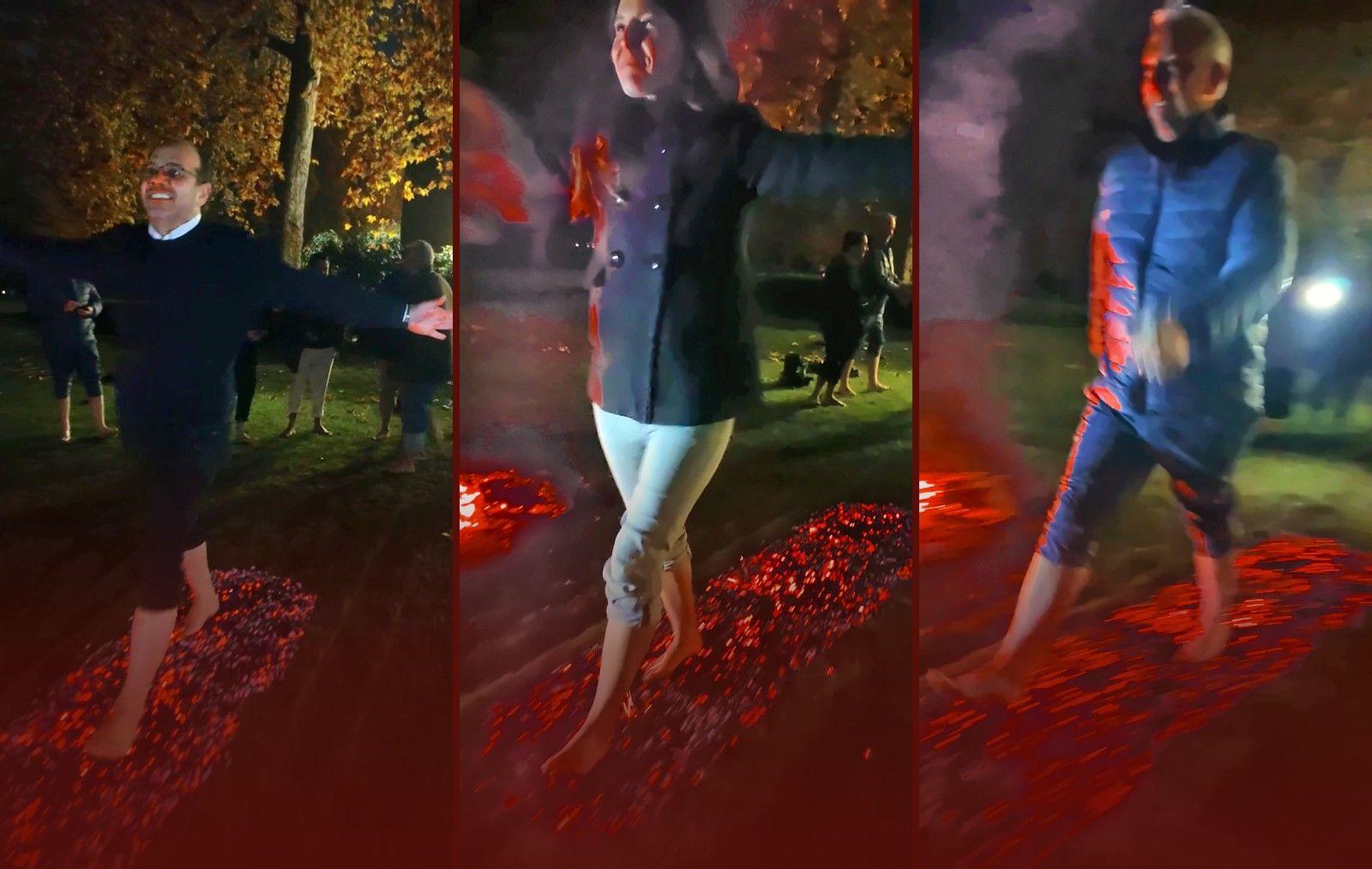
If you want a team event people will still be talking about in ten years' time, choose something that gets everyone's heart racing. Walking barefoot across glowing embers at night, stepping onto a bed of broken glass or breaking through a wooden board with your bare hand all give a team a moment of real fear that they face together. That shared moment brings people closer, very quickly.
In this article we share the high-adrenaline experiences we run for teams in the UK, what the research says about why they bond people so strongly, and how to choose the right one for your group. We run corporate fire walks and empowerment experiences for teams across the UK, so we see it happen every time a group gathers around the embers and cheers each other across.
Why facing fear together brings a team closer
There is good science behind the buzz people feel after a fire walk. Five findings explain most of it.
Going through something tough together builds trust. Psychologists at the University of Queensland asked groups to complete an uncomfortable physical challenge, such as holding their hands in ice water, while other groups did an easy version of the same task. The groups who shared the discomfort felt more bonded afterwards and cooperated more in a team game (Bastian, Jetten and Ferris, 2014). A follow-up study found that the sharing is what makes the difference: the same discomfort faced alone did not have the same effect (Qi and colleagues, 2020).
The people cheering feel it too. Researchers put heart rate monitors on fire walkers at a traditional fire walk in the Spanish village of San Pedro Manrique, and on the people watching. The heart rates of friends and family watching rose and fell in step with the fire walkers, while the heart rates of strangers in the crowd did not (Konvalinka and colleagues, 2011). Everyone around the fire is part of the experience, whether or not they walk.
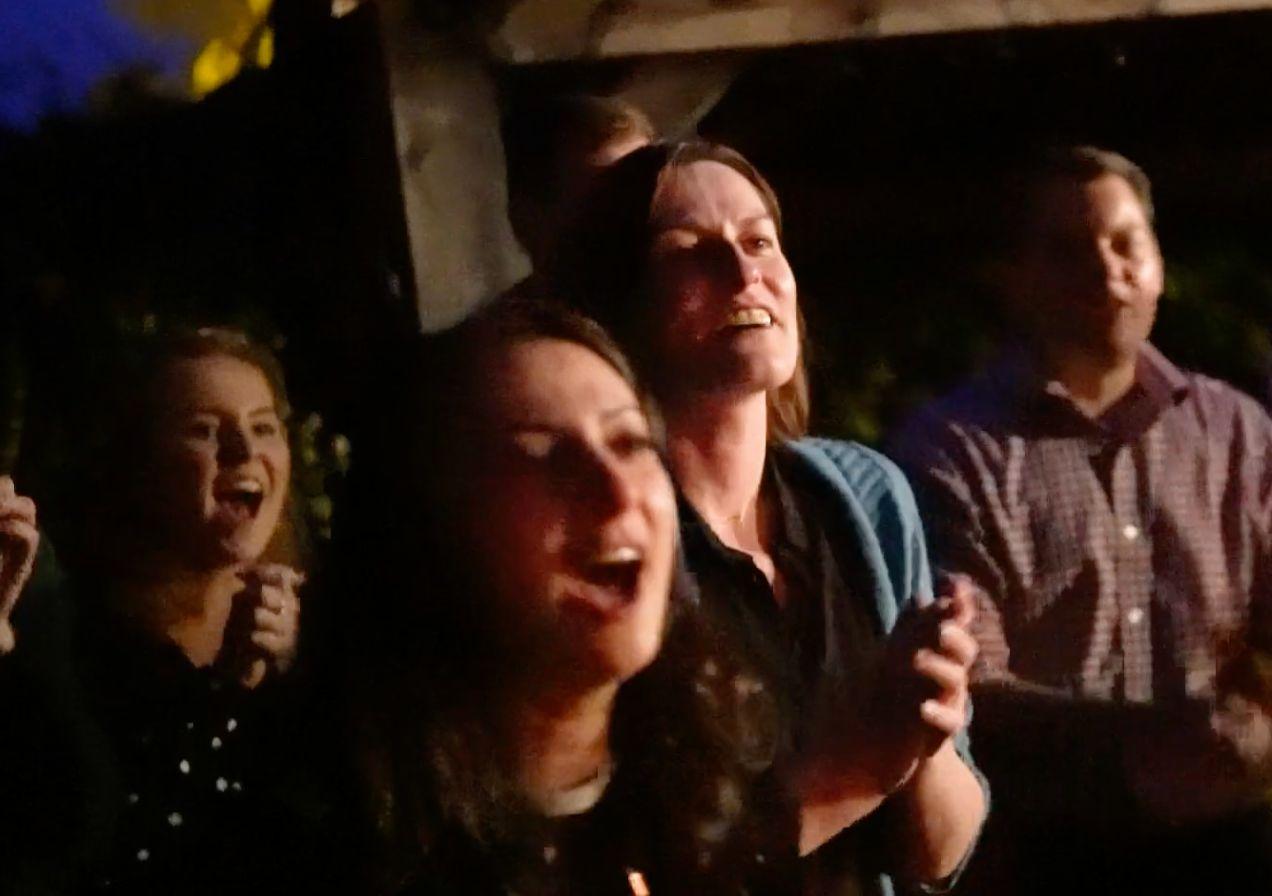
Doing something new and exciting together lifts a relationship. Most of this research is on couples, but the finding is a useful one for teams. Couples who took on a new and physically exciting task together, such as an obstacle course, reported a bigger rise in how good their relationship felt than couples given an ordinary task (Aron and colleagues, 2000).
Emotional moments are the ones we remember. When an experience gets our heart racing, the brain releases stress hormones that help store that memory for the long term (McGaugh, 2004). That is why people can describe their fire walk in detail years later.
Courage grows by doing. Albert Bandura found that the strongest source of self-belief is a mastery experience: actually doing the thing you doubted you could do (Bandura, 1977). Stepping off the embers gives people a reference point they can draw on whenever they face something hard at work.
Five high-adrenaline team building experiences we run for UK teams
1. A fire walk under the night sky
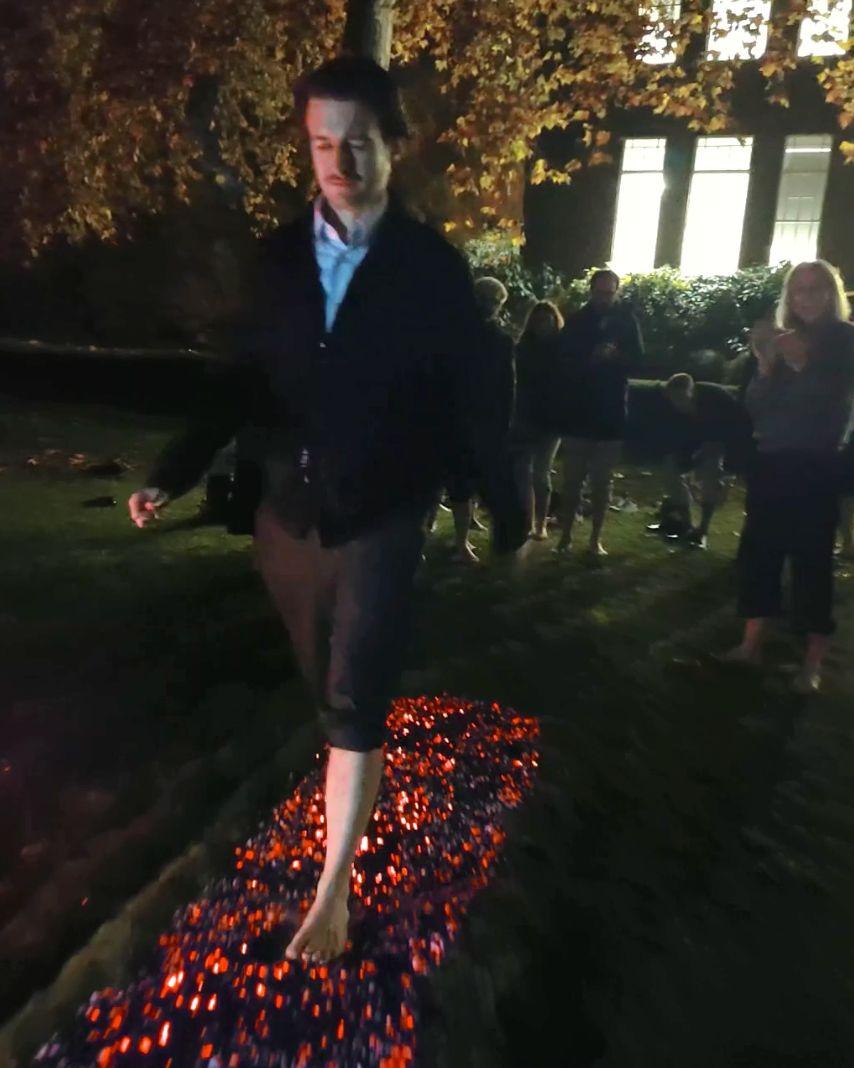
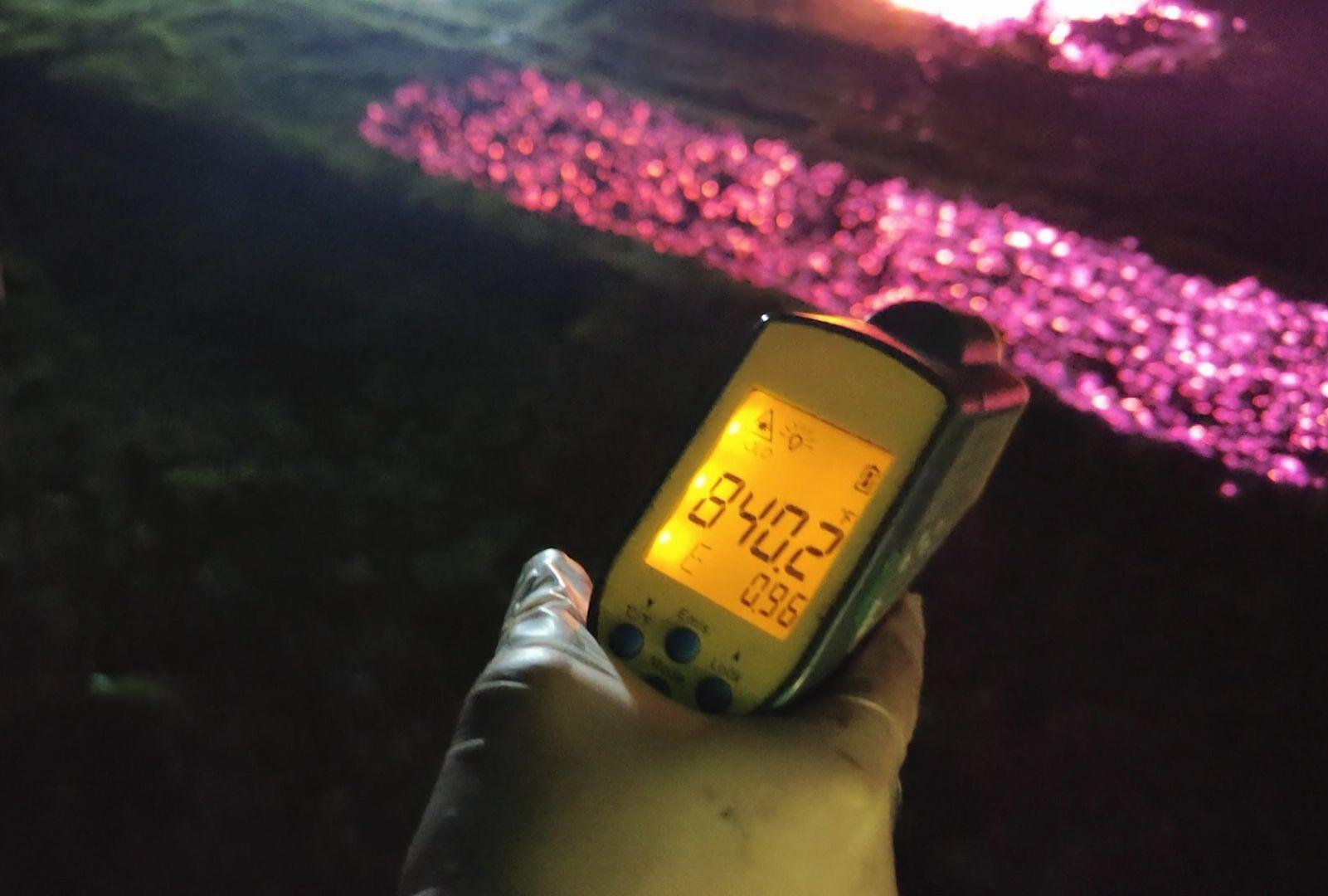
This is the big one. After sunset, a fire is lit and burns down to a bed of glowing, red-hot embers. While it burns, the group works on fear, self-doubt and the beliefs that hold people back. Then, one at a time, the people who choose to walk step out barefoot across the embers, with the whole team around them cheering them on. It is a rush of excitement and pride that is very hard to find anywhere else. A corporate fire walk with Inner Leader works for groups of 8 to 50 people and can take place at your own venue.
2. Glass walking
Walking barefoot across a bed of broken glass sounds impossible, and that is exactly why it works. It switches on the same fear response as the fire and can be run indoors, so it fits a team day or a conference at any time of year.
3. Board breaking
Each person writes a fear or a limiting belief on a wooden board and then breaks through it with their hand. It takes a few minutes per person, works well indoors and gives everyone a powerful moment of their own, in front of colleagues who are willing them on.
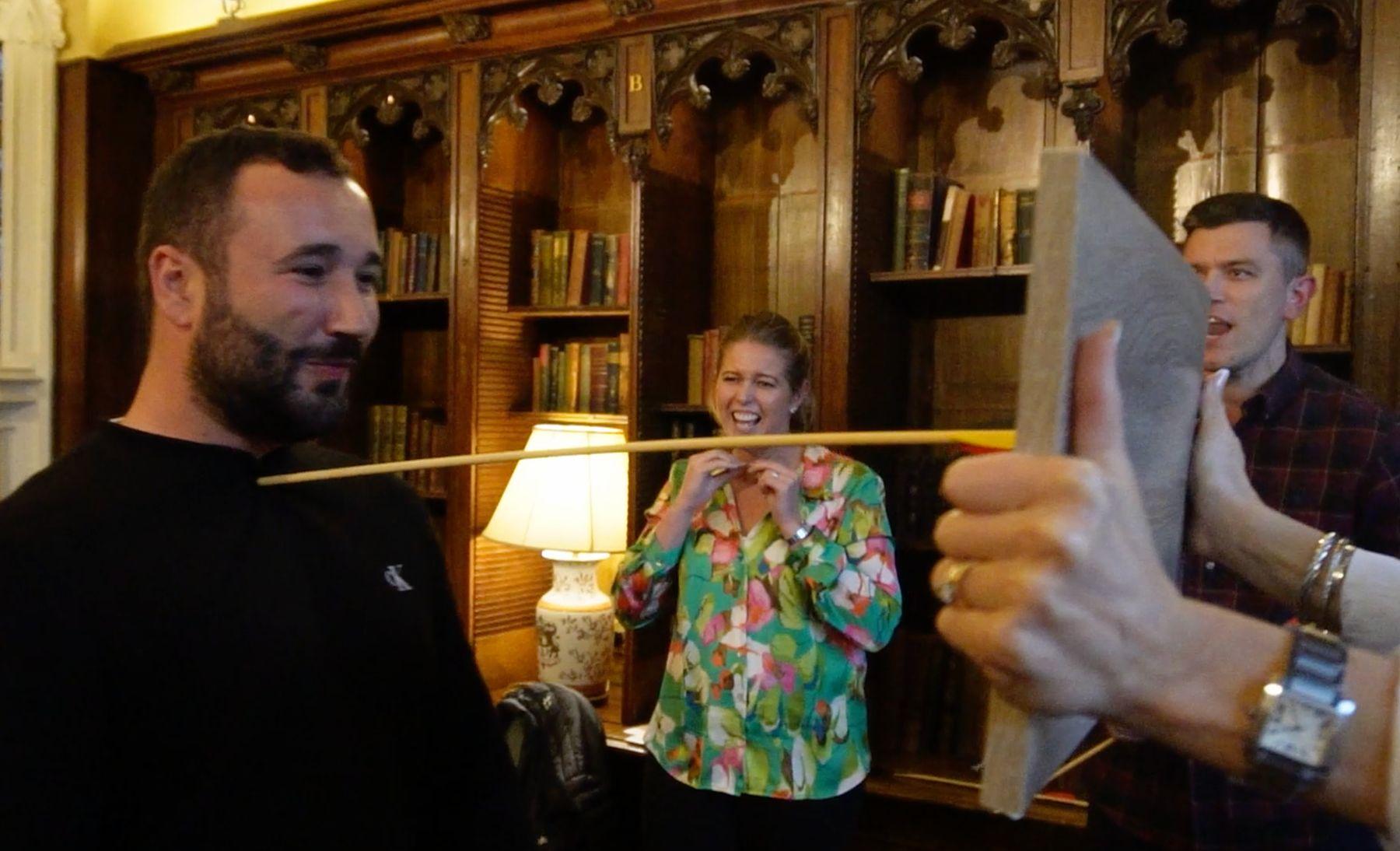
4. Arrow breaking
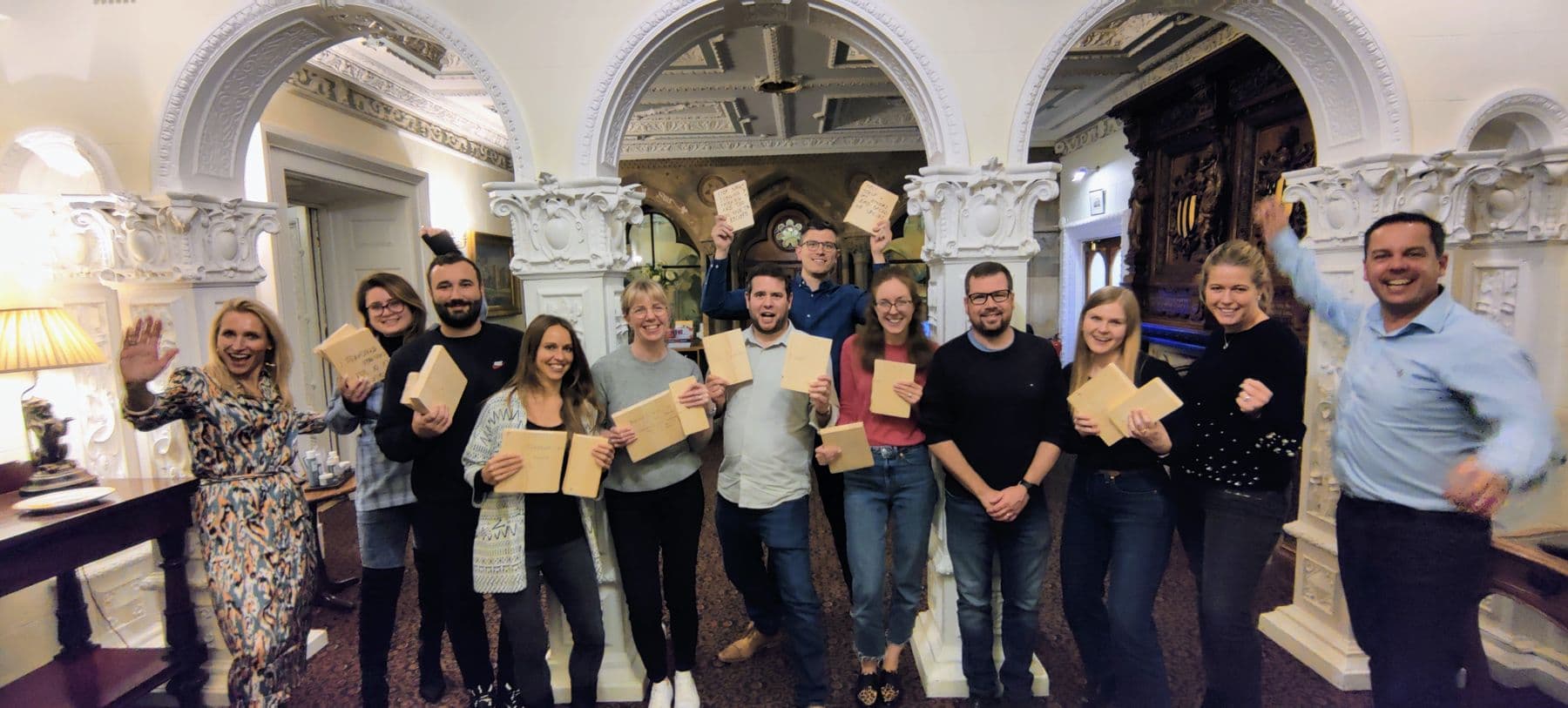
Each person places a metal-tipped wooden arrow against the softest part of their throat and snaps it. Your conscious mind knows it is not possible, and minutes later you have done it. Many people find it a bigger psychological challenge than the fire walk.
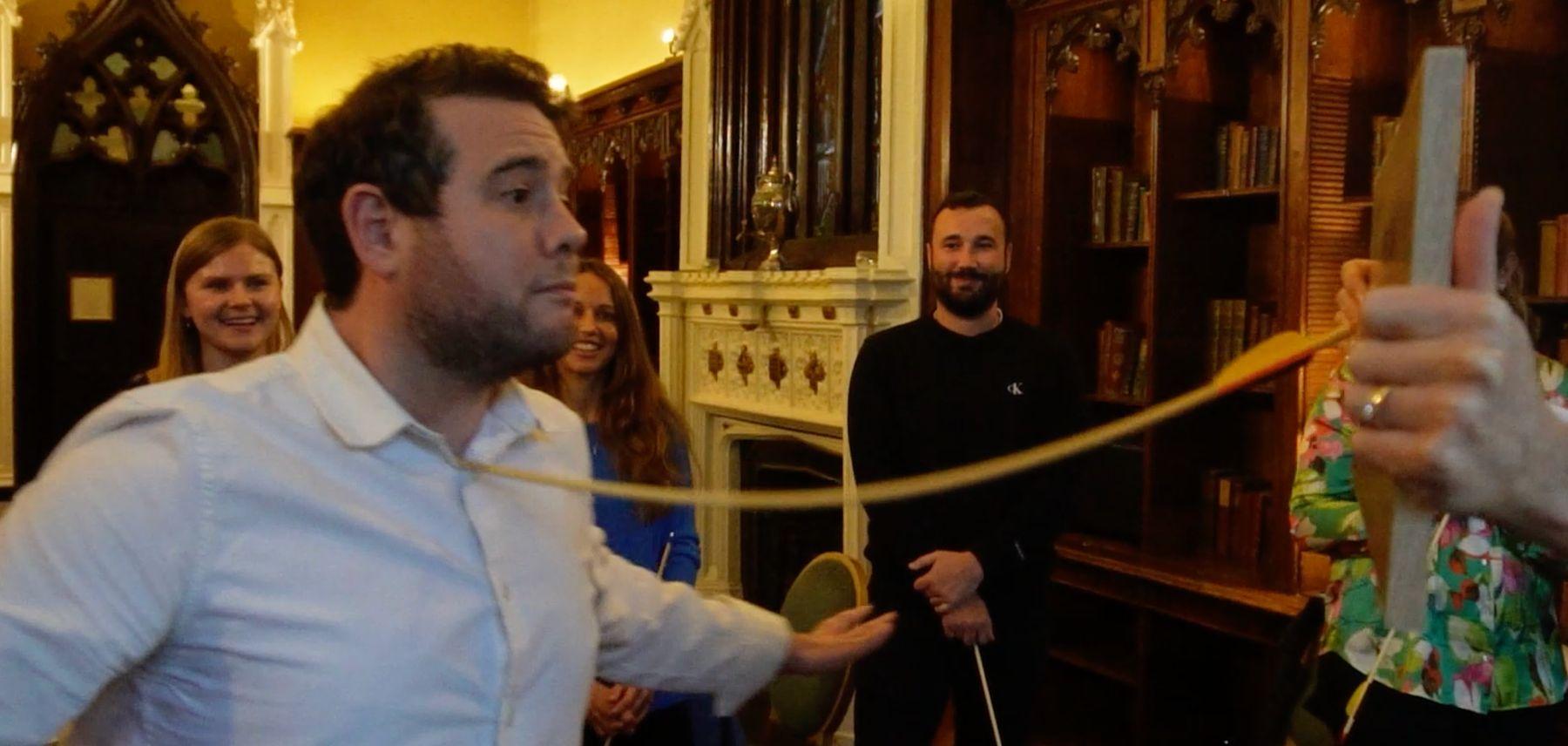
Arrow breaking runs indoors, so it can be built into a team day or a conference. Before a fire walk, it can also run inside the mindset session while the fire burns down.
5. Trust falls
In a trust fall, one person stands with their back to the group, crosses their arms over their chest and falls backwards, trusting their colleagues to catch them. Letting go and falling into the hands of the people you work with takes real courage.
For the person falling, it is a moment of putting complete trust in the team. For the people catching, it is a moment of being trusted completely and taking responsibility for a colleague. It fits easily into a team day, and everyone has a part to play.
What a corporate fire walk costs
Our fire walk planning guide has the price, the space we need, insurance and booking details on one page, with a PDF you can share with your venue.
How to choose the right activity for your team
A few simple questions will point you to the right choice.
- What do you want to be different afterwards? If you want people closer and more energised, almost any of these will help. If you want people to take more courage back to work, choose an activity with time built in to prepare beforehand and talk it through afterwards.
- How many people are coming? An evening fire walk works for 8 to 50 people, and board breaking can be run with a whole conference.
- Can everyone take part in some way? Taking part should always be a choice. The best activities give an important role to anyone who would rather not take part or is not physically able to, such as cheering colleagues on. As the heart rate research shows, they share the experience too.
- Where and when? A fire walk comes to your venue and takes place outdoors after sunset. Glass walking, board breaking and arrow breaking run indoors all year round.
- Is it safe and properly insured? Ask who is leading the activity, what qualifications they hold and what insurance is in place. The activity should feel frightening and be safe, and it is that combination that lets people practise courage without any real risk.
What it looks like in practice
At Harvey Nash, a leadership day ended with the team writing down their biggest fears and breaking through them in an arrow-breaking exercise. It became a shared moment that bonded the group.
The effect lasts long after the event. As one participant told us:
Making the buzz last back at work
The adrenaline fades by the next morning. What lasts is what people decide the experience means for them. David Kolb's work on how adults learn from experience shows that people learn most when they reflect on what happened and then work out how to use it (Kolb, 1984). So the conversation after the activity matters as much as the activity itself.
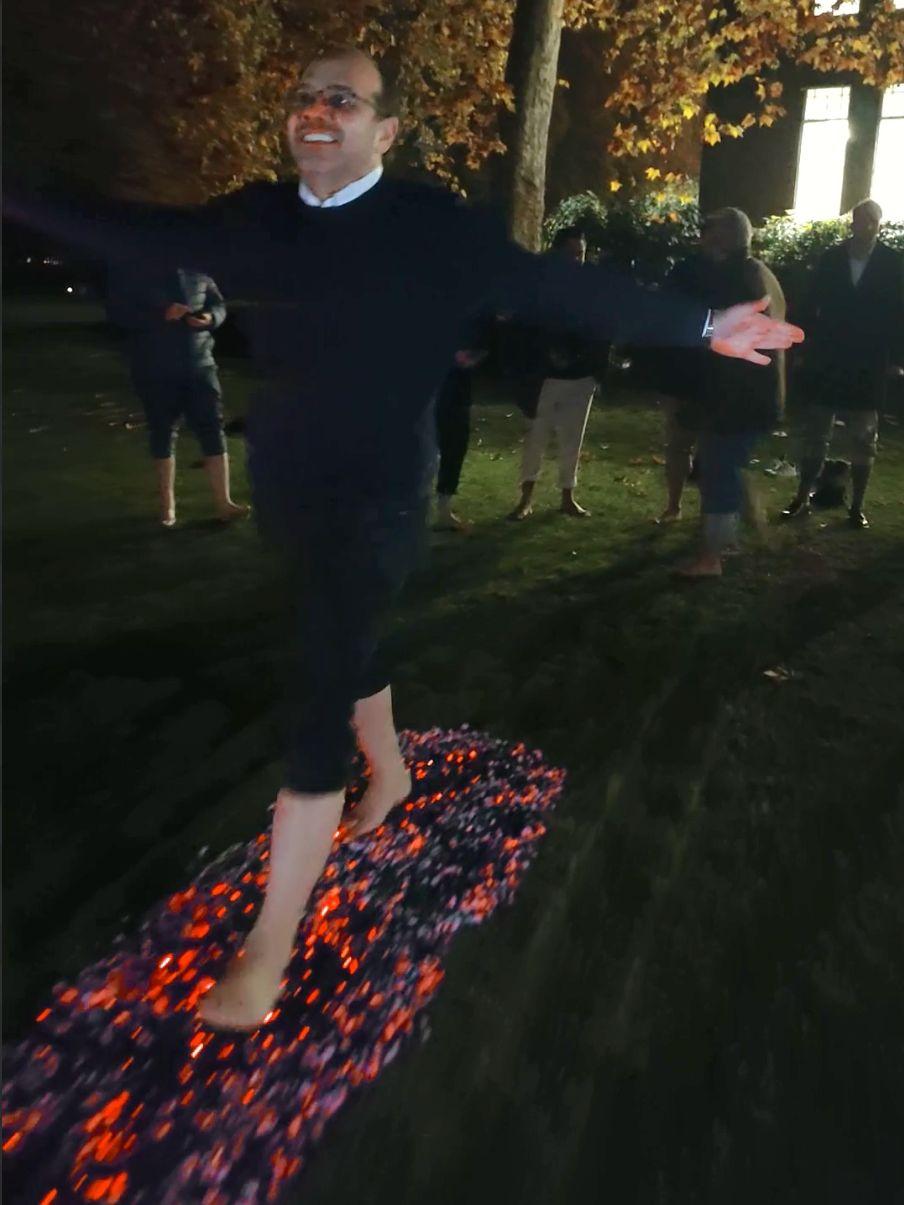
That is why every Inner Leader fire walk ends with the group sitting down together to talk about what happened, what each person learned about themselves and where else they can use the same courage at work. Months later, facing a tough meeting or a new challenge, people think back to the fire and remind themselves they have already done something far scarier.
If you would like the energy of the day to carry into how the team works together, you can combine it with a team development day or build it into a leadership development programme. For a conference, board breaking, arrow breaking or glass walking can be built into the day alongside one of our keynote talks.
For more on what makes a team event worth the time, read how team building training shapes high-performance teams and why psychological safety matters in high-performing teams.
Planning an away day, offsite or conference and thinking about a fire walk? Our firewalking page explains how an evening runs, how we keep it safe and who it is for.
See how a fire walk evening runsQuestions
What high-adrenaline team building experiences does Inner Leader run?
The high-adrenaline team building experiences we run for UK teams are fire walking, glass walking, board breaking, arrow breaking and trust falls. A corporate fire walk is the one people most often remember for life, because the whole team gathers round the embers to support each person as they cross.
How much does a corporate fire walk cost?
A corporate fire walk evening with Inner Leader starts from £2,950 +VAT for 8 to 16 people, and we quote for larger groups of up to 50. That includes the set-up and the ground protection, building the fire, then lighting and tending it throughout the evening. Afterwards we clear up the ashes, remove the turf and sweep the ground, so we leave everything even cleaner than when we arrived. Facilitators' travel is added to the quote. It works for groups of 8 to 50 people at your venue. See our firewalking page for how an evening runs, and our fire walk planning guide for the price, space, insurance and booking details on one page.
Why do high-adrenaline activities bring teams closer together?
High-adrenaline activities bring teams closer because people face a real moment of fear together. Research from the University of Queensland found that groups who shared an uncomfortable challenge felt more bonded and cooperated more afterwards. Emotional moments are also stored more strongly in memory, so the shared experience stays with the team for years.
Can high-adrenaline team building be done indoors?
Yes. Glass walking, board breaking and arrow breaking can all be run indoors at your venue, office or conference, at any time of year. A fire walk takes place outdoors after sunset, usually in the grounds of your venue.
How do you make the effect of a team building day last?
The effect of a team building day lasts when people talk through what happened and decide how they will use it at work. Research on how adults learn from experience shows that reflection turns an experience into learning. Every Inner Leader fire walk ends with the group discussing what they learned and where they will use that courage at work.
Bring this into the room.
Tell us what's going on with your team. If we're not the right fit, we'll let you know. We reply within one business day.